Classic Sephardic Judaism: Part 2 - the “fusion of tradition and modernity.”
Excerpts from Rabbi Daniel Bouskila’s
A Tradition with Vision: Sephardic Judaism for the 21st Century


Classic Sephardic Judaism achieved the “fusion of tradition and modernity” in two essential areas – the intellectual domain of Judaism (Torah study), and the religious/practical domain of Judaism (Halakha). These two areas – the intellectual and the spiritual -- and the manner in which they were handled and developed by Sephardic scholars and rabbis became the hallmarks of Classic Sephardic Judaism.
TORAH STUDY
In the intellectual domain, the classic Sephardic rabbis and scholars were the first to merge Torah study with broader disciplines of study. Philosophy, rationalism, logic, politics, science, medicine, astronomy, mathematics and mysticism all found their way into the Torah commentaries of Sephardic rabbis. Starting with Maimonides, all the way through the “Golden Age of Spain” and beyond the expulsion of Spanish Jewry in 1492, Sephardic rabbis – to varying degrees – were composing Torah commentaries where traditional Talmudic studies were mixed with branches of knowledge from the prevailing culture where Jews lived.
Far from isolationism, the intellectual milieu of Sephardic Judaism re-read its entire tradition in light of new and developing branches of knowledge, examining complex religious topics such as creation, prophecy and miracles using both traditional Talmudic interpretations alongside these new branches of knowledge.
This intellectual method is one of the characteristic strengths of Classic Sephardic Judaism, as it reflects a worldview where a Jew must confront the intellectual challenges of the day and – where applicable and possible – create a spiritual harmony between Torah and general knowledge.
Rabbi Chouraqui best describes this unique approach of Sephardic Judaism, and how it carried itself into the modern world:
“Sephardic culture throughout the ages developed in concurrence with general culture, thus continuing the tradition of the Golden Age of Spain, in which the internal Jewish world recognized the wider world without losing its own uniqueness.
The Sephardic Sages of recent generations were aware of current events and changes in the world around them. This is especially true in more recent years, since modernism in its European version arrived in the Eastern lands. The Sephardic reaction to the changes of the new age was quite different from the Ashkenazic response. On the one hand, the educational model of the Sephardic sages approved of general studies, and even considered them as worthy endeavors in addition to basic Jewish education; and in the spirit of this approach, the Sephardic sages did not withdraw from modern society in the way that some Ashkenazic Orthodox elements did. On the other hand, with the deepening of European rule in Muslim countries, the pull towards secular culture was in opposition to tradition; and the response of the Sages to protect the traditions of Israel was not to develop the model of strict, isolationist Orthodoxy. Instead, they emphasized the principles that strengthen faith that have guarded Jewish identity and communal unity, with the goal of maintaining the members of the community in the Jewish world as much as possible.”
Rabbi Chouraqui affirms that the world of Sephardic Judaism classically represented a synthesis of Judaism and the society where Jews lived, as long as that society’s culture did not impact Judaism to the extent of complete secularization.
Halakha
Along with the intellectual world of Torah study, the harmonization of Judaism and general culture also materialized in the spiritual domain, primarily expressed through the world of “halakha.” What is Classic Sephardic Judaism’s approach to halakha?
For answers and definitions, let us first explore the words of both Dr. Elazar and Rabbi Chouraqui.
We begin with Dr. Elazar:
“The basic element of the Sephardic religious outlook embodied in the halakhic decision-making of its religious leadership was that halakhah should facilitate Jewish living in the world in which Jews found themselves, not seek to separate the Jewish people from the external world per se.”
Dr. Elazar asserts that halakha was meant to help Jews navigate through society, not separate them from it. How did the classic Sephardic rabbis achieve this? We turn again to Rabbi Chouraqui:
What characterizes the rabbinic methods of the Sephardic sages?
One of the characteristic principles of the Sephardic sages is the way they determine halakha between different approaches, as opposed to a pesak (decision) that wants to satisfy all differing opinions. This is the basic principle known in rabbinic language as kohah dehetra adif - the power of the heter (the lenient path) is the preferred. This principle praises the greatness of the Hakham who delves deeply into an issue and finds a lenient halakhic solution.
Between the strict and the liberal positions, the Sephardic Sages established a third path in which their great humility before God and their commitment to serve God brought them to adopt original halakhic stances in order to deal with new situations, without fearing lenient decisions, rulings and originality.
Knowledge of life experience often accompanies and guides halakhic decision-making, together with a realistic viewpoint, according to which a harsh position would apply to only a small part of the public. But the responsibility of the Hakham is to the whole community, to all of the Jewish people, perhaps for all future generations. Therefore it would not be responsible to set an excessively stringent standard of halakha that would cause a great portion of the community to be lost if they cannot abide by it.
The most illuminating aspect of Rabbi Chouraqui’s analysis is that the Sephardic method of deciding and establishing halakha is in fact different from the rest of the Jewish world. Rabbi Chouraqui asserts that Sephardic Judaism is, in point of fact, a centrist, middle of the road position that sits between the “strict and liberal positions.”
In fact, when it comes to the strict halakhic rulings typical of certain elements of ultra-Orthodoxy, Rabbi Chouraqui states:
Deciding halakha stringently does not reflect the greatness of a Hakham, and many times it attests to an educational concern, or to fear of deciding the halakha, which prevents the Hakham from choosing the easier path over the stricter one. Harsh halakhic decisions and the desire to accommodate all opinions have caused an accumulation of stringencies that makes it difficult for a later posek to weigh, maneuver, and navigate the halakhic process in the directions needed for a specific case that comes before him. Thus, fear of God pushes aside the dynamic force of halakha.
Since halakha is meant to facilitate a Jewish way of life for the individual and the community, the good of the community cannot come at the expense of the “fear of God,” and, as Rabbi Chouraqui stated above, “the responsibility of the Hakham is to the whole community, to all of the Jewish people, perhaps for all future generations. Therefore it would not be responsible to set an excessively stringent standard of halakha that would cause a great portion of the community to be lost if they cannot abide by it.”
On the other hand, respect and spiritual reverence for God cannot be removed from the halakhic decision making process. Liberal movements within the Jewish world today have often removed any spiritual element to their halakhic decision making process, treating halakha as a purely sociological issue. On this Rabbi Chouraqui states:
Conversely, there are many who outwardly praise the dynamic nature of halakha, and have little fear of God in their hearts, and because of this their conclusions cannot be called halakha.
The spiritual world of Sephardic Hakhamim was rooted in a deep and unquestionable belief in God, Torah from Heaven given to Moses at Mount Sinai, the truth of Biblical prophecy, and the sanctity of Jewish law and tradition. From this theological and spiritual place in life, Sephardic Hakhamim took their bold stands on halakha, thereby distinguishing them from liberal Judaism in that any and all decisions they made were born out of a spirituality that was deeply rooted in traditional Judaism, and where God and tradition – not sociology and social patterns – were the overarching spiritual concerns.
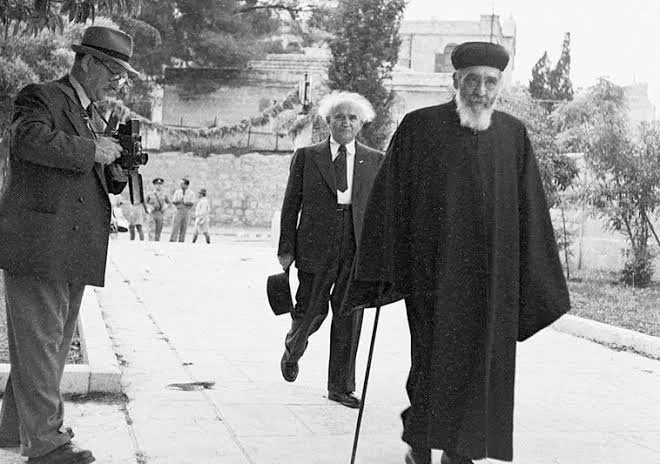
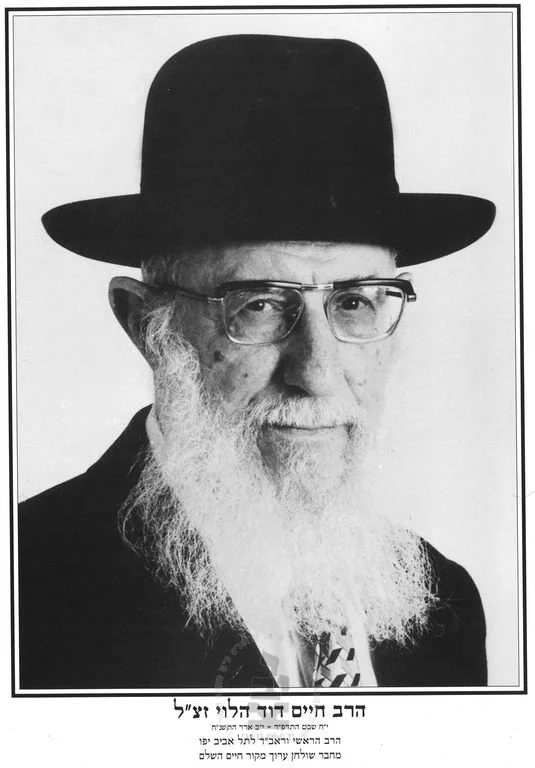
To illustrate Rabbi Chouraqui’s points, let us look at the teachings of two 20th Century Sephardic Hakhamim, both of whom were born and lived in Israel – Rabbi Benzion Uziel (Israel’s first Sephardic Chief Rabbi, died 1953), and Rabbi Haim David Halevy (Rabbi Uziel’s greatest student, Chief Sephardic Rabbi of Tel-Aviv-Jaffa, died 1998). More than any other rabbis in the modern era, Rabbis Uziel and Halevy exemplify the Classic Sephardic Tradition of Torah scholarship, Jewish thought, secular knowledge, engagement with modernity and society, and rulings in halakha that helped facilitate Jewish living.