The Classic Sephardic Spirit By Rabbi Daniel Bouskila
This essay is a personal meditation on Sephardic Judaism. It’s personal, because Sephardic Judaism is the Judaism I grew up with at home in Los Angeles. Above all, it’s personal, because Sephardic Judaism is something I deeply believe in as a way of life.
This essay is a personal meditation on Sephardic Judaism. It’s personal, because Sephardic Judaism is the Judaism I grew up with at home in Los Angeles. It’s personal, because Sephardic Judaism is what I represented for seventeen years on a Sephardic pulpit in Los Angeles (Sephardic Temple Tifereth Israel). It’s personal, because in my current position as the International Director of the Sephardic Educational Center, Sephardic Judaism is what I write and lecture about in communities all over the world—from Los Angeles to Jerusalem. Above all, it’s personal, because Sephardic Judaism is something I deeply believe in as a way of life.
My parents were North African Sephardic Jews who came to Los Angeles in 1961. I was born three years later, making me a first-generation American. Growing up, we spoke French at home, and the Judaism we practiced was deeply rooted in the Moroccan/Algerian-Sephardic traditions that my parents brought to these shores. Despite being born and raised in America and educated in the mainstream Ashkenazi Jewish day school system, when asked about my Jewish affiliation, I never use the denominational titles common in American Judaism. Instead, I express my identity as a “French-Moroccan American Sephardic Jew,” or, in short, a “Sephardic Jew.” This description is born out of the unique form of Judaism that we practiced in my home. What was that Judaism like?
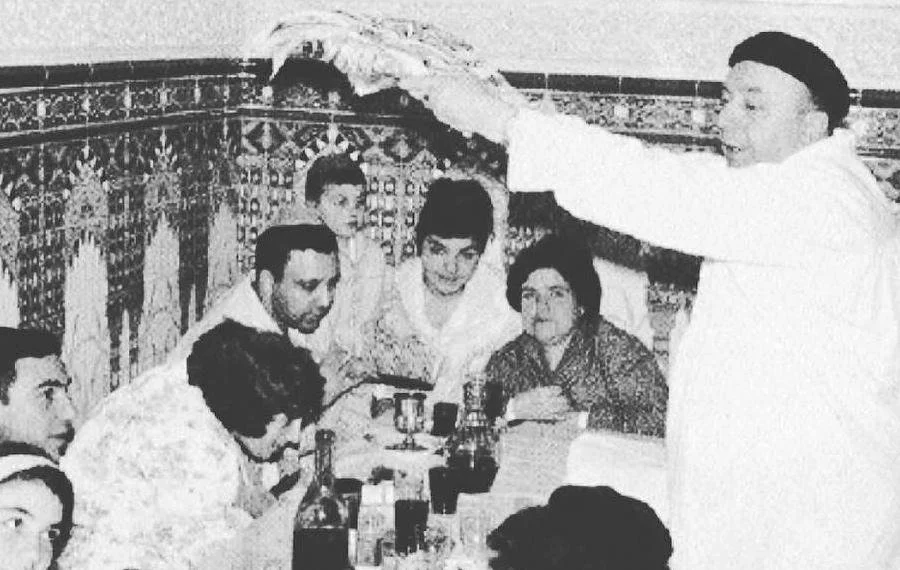
Bouskila Family seder in Morocco
In the home where I grew up, denominational terms such as Orthodox, Conservative, Reform, Ultra-Orthodox, or Secular Zionist were not a part of our vocabulary. Jews were Jews. My family observed and respected our traditions, including Shabbat, holidays, and synagogue life. We were most likely considered “not religious enough” by certain people’s standards, but we were unapologetic about who we were. We did not live our Jewish life to conform to somebody else’s opinion, nor did we change our way of life because a rabbi wrote an article or delivered a sermon deciding to impose new strictures on the community. We celebrated Judaism with a deep sense of commitment to the heritage and traditions of our family’s ancestors. We observed Judaism with warmth and beauty. Shabbat and holiday tables were adorned with the artistic grandeur and culinary magic that my mother brought with her from Algeria. We delighted in our spicy and aromatic foods, our spiritually uplifting tunes, and our lively stories. Our Judaism was characterized by its genuine joie de vivre.
A perfect example of this is our celebration of Passover at home. As a child, I knew that the Passover Seder in my home was different than that of my friends. “Our Passover Seder is translated into Arabic,” I used to tell my friends in school, knowing the shock value that created for Ashkenazi Jewish kids. “Arabic?” they responded in bewilderment. “That’s so weird! How could you translate a Seder into Arabic? What does it sound like?”
When my father split the middle matzah at the beginning of the Seder, it sounded like this:
Haq’da Qssam L’lah lb’har âla tnass l’treq ‘hin khrzeu zdoud’na min massar, âla yed sid’na oun’bina moussa ben amram haq’da n’khrzeu min had l’galouth amen ken yehi ratson.
Interestingly, I don’t ever remember asking my father to translate this. Only later, after my father passed away, did I research the meaning of this text. I discovered that this was a text unique to the Haggadah of North African Jews, and the reason it was recited during the splitting of the middle matzah is related to its meaning:
This is how the Holy One Blessed be He split the sea into twelve separate paths, when our ancestors left Egypt, through the leadership of our master and prophet, Moses son of Amram, of blessed memory. Just like God redeemed them and saved them from harsh labors and brought them to freedom, so, too, may the Holy One Blessed be He, redeem us for the sake of His great name, and let us say, Amen.
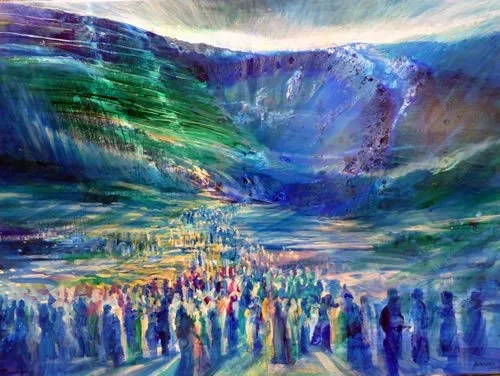
The Jews by the Parting of the Sea. (Art by Yoram Ranaan)
When I read it in English today, I understand what the original text means. But when I heard my father chant it in the original Judeo-Arabic, I connected to its deeper meaning, far beyond the translation of words. In a language whose words I did not understand, but whose pronunciation and music evoked deep emotions within me, this chant helped me learn the story of Jewish life in Morocco more vividly than any history book ever could. Hearing it evoked images in my mind of my great-grandfather Rabbi Yosef Pinto at his Seder in Marrakech, dressed in a jalabiya with a scarf on his head, breaking the middle matzah, chanting the same Judeo-Arabic text in the exact same melody . . . with my father as a young child at the table. Haq’da Qssam L’lah took me back in time to the Moroccan mellah (Jewish ghetto) of my father’s upbringing, a place I’ve only been to in my mind, but a place that I nonetheless could hear, feel, and even smell, especially at that moment. Hearing the Haggadah in Arabic removed me from my first-generation American milieu, and transposed me back to a place where a deeply spiritual Judaism was enriched by the cuisine, spices, music, and language of North African Arab culture.
During our Seder, we didn’t spend much time talking about our denominational “philosophy or ideology,” because we had none. Conversations about “right-wing ultra-Orthodoxy,” “liberal reform,” or “leftist secularists” were not a part of our Seder. Instead, we ate, sang, told stories, heard jokes in French and Arabic, laughed in good spirits, cried from emotion, and celebrated the beauty of our unique culture. Reading the Haggadah was not about debates and discussions, but more about celebrating family life. Our Seder was as much a cultural gathering as it was a religious observance.
This was not only true for Passover, but every Friday night, and every day of our lives as Jews at home. Our Shabbat tables—and our Jewish lives in general—were void of divisive denominational affiliations. When we discussed Torah, it was a nondenominational Torah whose teachings were meant to increase our moral and ethical character as people. Some may view all of this as naïve or simplistic. I view it as an “undeclared ideology,” one that was not born in conferences or conventions, but was naturally lived by thousands of Sephardic families over many generations. The great Sephardic rabbi and philosopher Maimonides, who encouraged Jews to live life in “the middle path,” inspired this rich and beautiful Jewish lifestyle. Maimonides’s “middle path” became the golden rule of Sephardic Judaism.
When I identify myself as a “Sephardic Jew” today, it is these very values handed to me by my parents that serve as my Jewish frame of reference. For me, the term “Sephardic” represents much more than my ethnic background. Sephardic Judaism informs my values, celebrates my culture, and invokes my deep connection to my ancestors’ customs and traditions. It also informs my rabbinical career, specifically how I study, teach, and practice Judaism within the complex denominational world of American Judaism.
My parents always told me that the rabbis they knew growing up were the unifying forces of their communities. Everybody respected them as gentle sages whose leadership was characterized by wisdom, piety, and a genuine love for people. My parents often remarked that their rabbis seemed more modern in their outlook than many of the rabbis they met in the United States. Their rulings in halakha (Jewish law and practice) were both moderate and modern, they always expressed a genuine concern for social justice, and their sermons inspired unity and goodwill. Only when I started to study the writings of Sephardic rabbis did I begin to understand what my parents meant.
Rabbi Ben Zion Meir Hai Uziel (1880–1953), the first Sephardic Chief Rabbi of the State of Israel, was the embodiment of the Sephardic sage of my parents’ upbringing. A leading scholar and thinker, Rabbi Uziel’s multi-volume works in halakha and Jewish thought reflect the classic Sephardic fusion of traditional Torah with the modern world.
Rabbi Uziel introduces his nine volumes of halakhic writings by stating:
In every generation, conditions of life, changes in values, and technical and scientific discoveries create new questions and problems that require solutions. We cannot avert our eyes from these issues and say “Torah prohibits the New,” i.e., anything not expressly mentioned by earlier sages is ipso facto forbidden. A fortiori, we may not simply declare such matters permissible. Nor, may we let them remain vague and unclear, with each person acting with regard to them as he wishes. Rather, it is our duty to search halakhic sources and to derive responses to currently moot issues. (Mishpetei Uziel 1.ix–x)
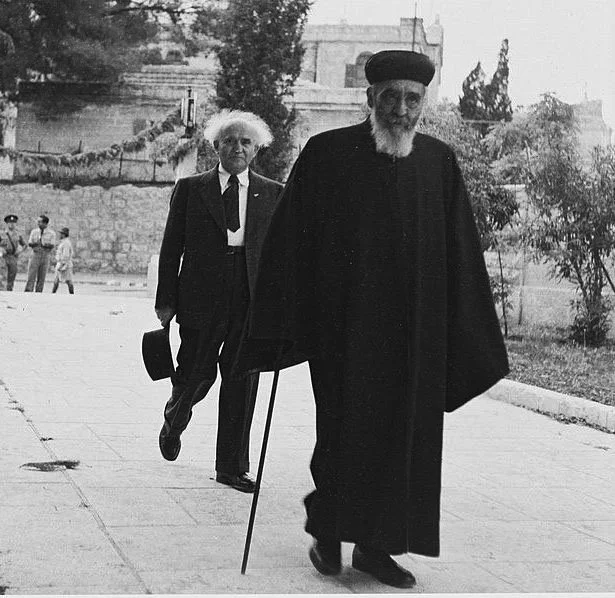
Rabbi Uziel and David Ben-Gurion
One of Rabbi Uziel’s greatest students was Rabbi Haim David Halevy (1924–98). Rabbi Halevy served as the Sephardic Chief Rabbi of Tel Aviv-Jaffa, and was the prolific author of multiple volumes on halakha and Jewish thought. Following the lead of his teacher, Rabbi Halevy wrote a legal position paper titled “On the Flexibility of Halakha,” where he wrote:
[Continuity of Judaism] is possible only because permission was given to Israel’s sages in each generation to renew halakha as appropriate to the changes of times and events. Only by virtue of this was the continuous existence of Torah in Israel possible, enabling Jews to follow the way of Torah. . . . There is nothing so flexible as the flexibility of halakha . . . it is only by virtue of that flexibility that the People of Israel, through the many novel and useful rulings innovated by Israel’s sages over the generations, could follow the path of Torah and its commandments for thousands of years. (7.235–38)
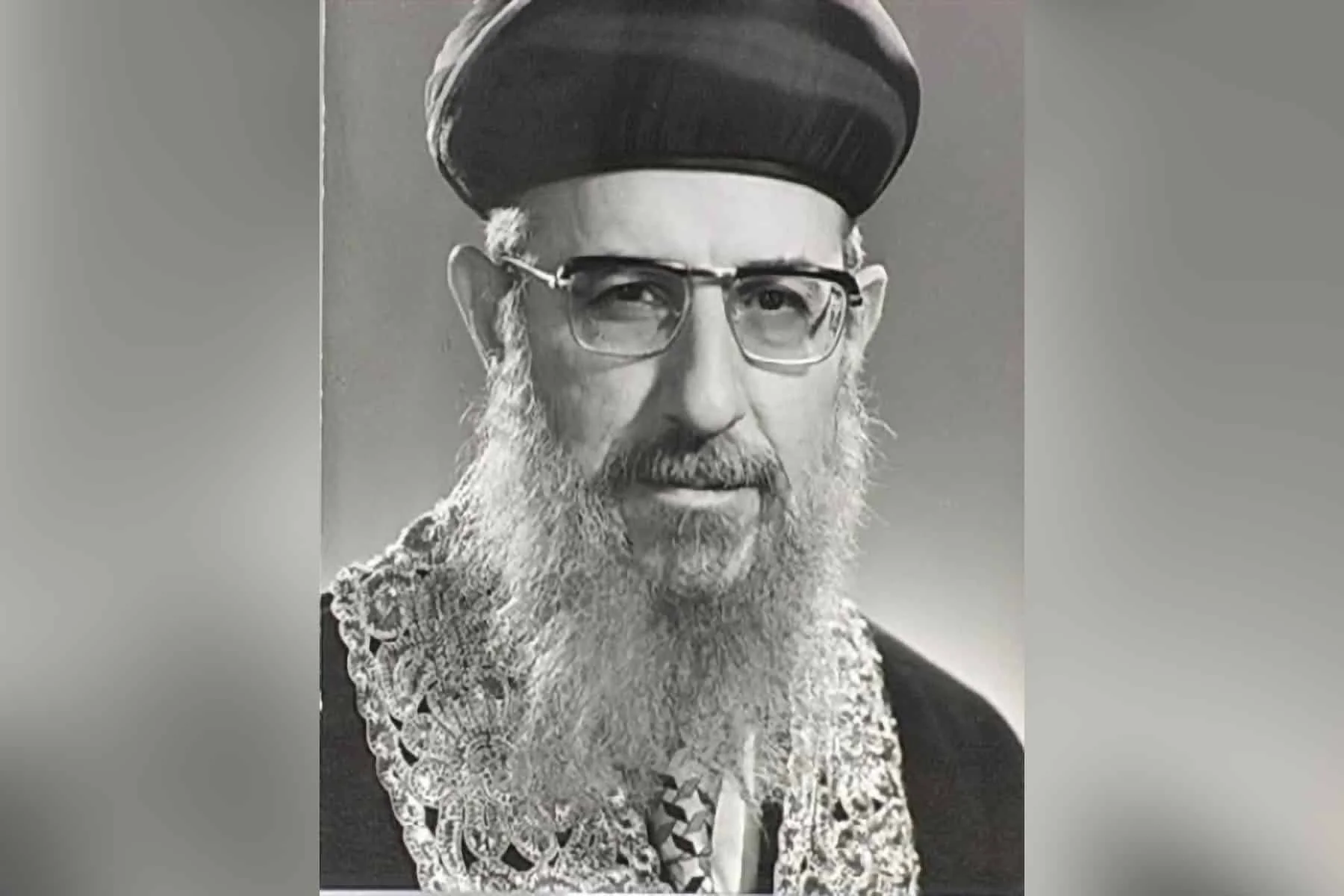
Rabbi Haim David Halevy
Both Rabbi Uziel and Rabbi Halevy advocate for the classical Sephardic fusion of tradition and modernity. Unlike the liberal denominations of Judaism, they view halakha as a keynote feature of Jewish religious expression. But differently than the trend of strictness characteristic of Orthodoxy, they believe that the modern world and halakha are not mutually exclusive; rather, they are quite compatible. It is thus the responsibility of the rabbi to interpret halakha in a manner that reflects the meeting ground between tradition and modernity.
Rabbi Uziel commented on this in a broader sense:
Our holiness will not be complete if we separate ourselves from human life, from human phenomena, pleasures and charms, but only if we are nourished by all the new developments in the world, by all the wondrous discoveries, by all the philosophical and scientific ideas which flourish and multiply in our world. We are enriched and nourished by sharing in the knowledge of the world. (Hegyonei Uziel 2.133–34)
Not only must halakha be compatible with the modern world, but so, too, must the Jew who lives in the modern world. Dating back to the Golden Age of Spain, the milieu of Sephardic Judaism always sought to embrace the wider world without losing its own uniqueness and traditions. This approach to life is one of the hallmarks of classic Sephardic Judaism.
In recognizing that there is a wider world than the insular Jewish community, Sephardic Judaism and its rabbis were well known for their concern for the social welfare of all human beings. Hand in hand with the internally Jewish system of halakha came a broader range of teachings that addressed the well-being of humanity.
Two outstanding Sephardic rabbis beautifully expressed this deep Sephardic value in the twentieth century: Rabbi Yitzchak Nissim and Rabbi Abraham Shalem.
Shortly before his death in 1953, Rabbi Uziel summoned Rabbi Yitzchak Nissim and told him, “You are the rabbi I choose to inherit my position as Israel’s next Sephardic Chief Rabbi.” Indeed, Rabbi Nissim (1896–1981) was elected Israel’s second Sephardic Chief Rabbi, a position he held for eighteen years. Throughout his term of leadership, Rabbi Nissim demonstrated a deep care for the social welfare of people from all walks of life. In a pre-High Holiday address delivered in 1963, Rabbi Nissim used the High Holidays as an opportunity to move society toward increased social justice:
The High Holidays present us with the opportunity for serious soul searching. Looking upon our situation today, I find it difficult to adjust to a society that lives life exclusively for the individual, void of caring for one’s fellow man. Let us look upon the underprivileged, the poor, and the depressed amongst us: have we sought to see and understand their suffering? Have we done enough to help them, educate them and uplift them, fulfilling to its fullest expression the commandment of “Your brother shall dwell together with you”? We must contemplate such matters on the High Holidays, searching deep within our souls for the way back to our cherished values of family, community and loving kindness. (24–25)
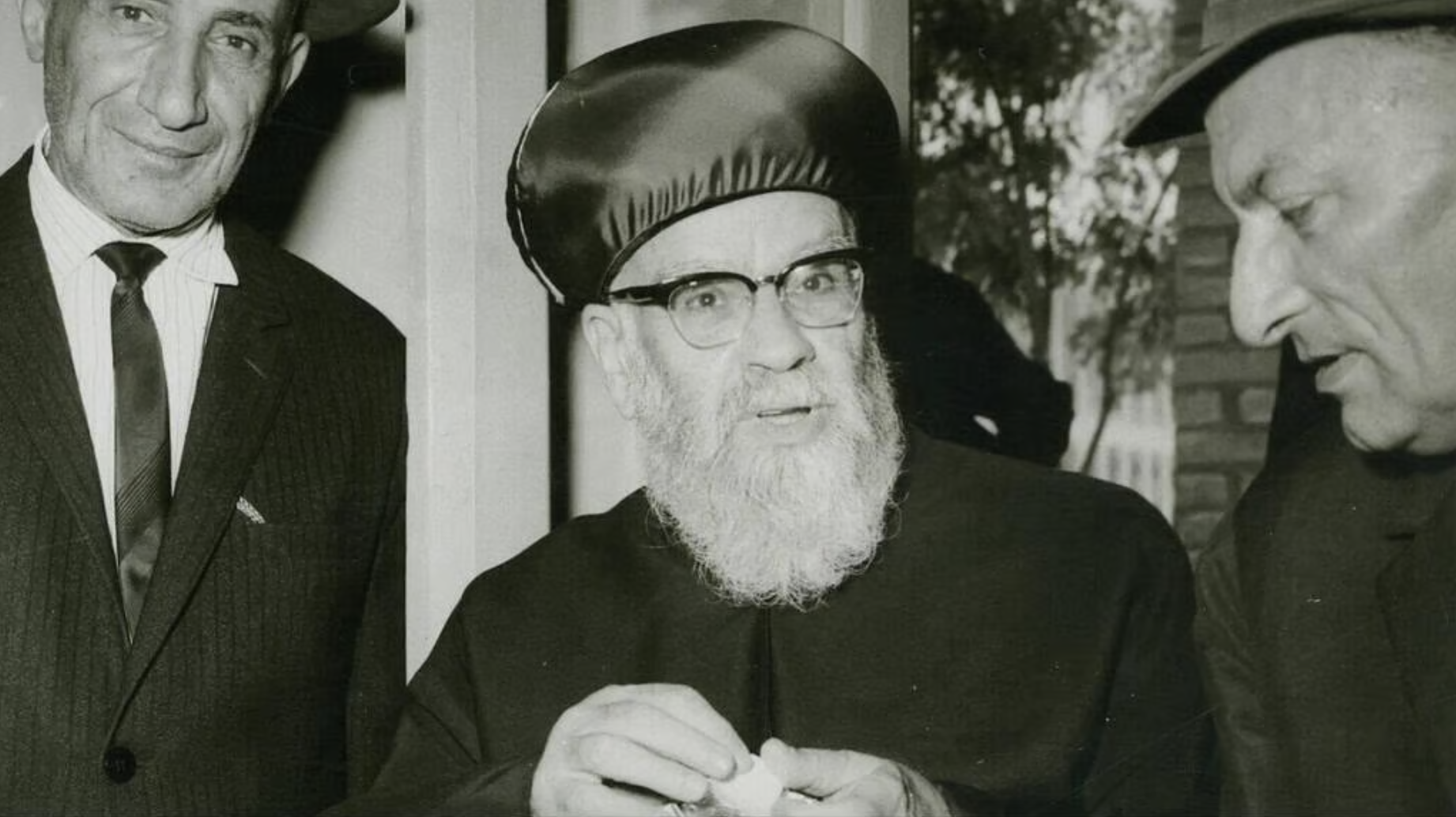
Rabbi Yitzhak Nissim (Alliance Israelite Universelle Museum)
Rabbi Abraham Shalem (1928–2014) was this generation’s last direct student of Rabbi Uziel. A Jerusalem native, Rabbi Shalem served Sephardic communities in Peru, Seattle, and Mexico City, before returning to Jerusalem as a rabbinic research scholar and author. Like his teacher, Rabbi Shalem was a classic Sephardic rabbi who combined a deep knowledge of Torah, a vast erudition in worldly affairs, and a genuine love and care for humanity.
In his commentary on the verse “They shall follow God’s way, doing charity and justice” (Gen 18:19), Rabbi Shalem writes:
It is not sufficient to live by a dry and mechanical observance of Jewish law. We must impress upon all of humanity the importance of balancing human intellect with acts of charity and kindness, with teachings that reflect truth and equality, and with promoting a way of life that protects the human rights of all human beings created in God’s image, without discriminating based on race, color or creed. Repairing the world in the spirit of God, for the good of all of humanity, can only happen through loving our fellow man, protecting their human rights, and performing acts of charity and kindness, for this is the ultimate will of God. (3.112–13)
The combination of my Sephardic upbringing, my parents’ stories about their rabbis, and the inspirational writings of Sephardic rabbis all contributed to my decision to carry the torch of Sephardic Judaism in the United States as a Sephardic rabbi.
When I ultimately joined the ranks of the Sephardic rabbinate, I unfortunately discovered a shocking reality that was quite different from the Judaism taught to me by my parents, or of that reflected in the Sephardic books that I studied. The Sephardic rabbinic leadership abandoned the moderate teachings of their parents, and of Rabbis Uziel, Halevy, Nissim, and Shalem, favoring instead the extremist, anti-modern, and isolationist ideology of Lithuanian ultra-Orthodoxy. This peculiar mode of Judaism is absolutely alien to the classic Sephardic tradition. Donned in black fedoras and black suits, a somber mode of dress as foreign to Sephardic Jews as the extremist ideology that comes with it, the majority of today’s Sephardic rabbis (and many of their followers) have veered far away from the traditions and way of life of their parents and grandparents. They have abandoned the tolerant, non-extremist philosophy of the rabbis and sages from their countries of origin, preferring instead to identify with the most extreme expression of Jewish factionalism. Rather than promoting a religious way of life that celebrates tradition, embraces modernity, and displays care and sensitivity toward all of humanity, they have chosen to denigrate their parents’ traditions as “not religious enough,” portrayed the previous generations of Sephardic Chief Rabbis as being “weak leaders” whose lenient rulings caused assimilation, painted the modern world as hostile to tradition, and expressed racist views contrary to the classic universalist viewpoint espoused by Sephardic rabbis. This is lamentable, because in a Jewish world whose denominational divisions have widened to extremes, Sephardic Judaism was once the enlightened voice of moderation, tolerance, and unity.
In an article titled “Can Sephardic Judaism Be Reconstructed,” the late Israeli sociologist Dr. Daniel Elazar concluded:
The revival of a living organic Judaism is the need of the hour in Jewish life. The best opportunity for doing so is through the Sephardic way. But can it be done? Only if there is a major effort to revive Sephardic halakhic interpretation, train Sephardic rabbinical leadership, and present the Sephardic way as an equally valid expression of Judaism. A major effort must be launched to reconstruct the Sephardic halakhic tradition and make it a living tradition with halakhic authorities addressing the great religious questions of our time in the Sephardic way. The restoration of Sephardic modes of teaching and learning and the establishment of educational institutions, particularly higher educational institutions, that will provide a home for those modes and train people able to express and continue the Sephardic way. (228)
I read Dr. Elazar’s article in 1993, just a year after it was published. 1993 is the year I entered the Sephardic rabbinate, and throughout my seventeen years on a Sephardic pulpit, I made every effort to teach and represent the classic mode of Sephardic Judaism taught to me by my parents, and by the Sephardic rabbinical books that I studied.
But I always felt that as long as the Jewish world lacked any formal institution that did what Dr. Elazar suggested, namely “to revive Sephardic halakhic interpretation, train Sephardic rabbinical leadership, and present the Sephardic way as an equally valid expression of Judaism,” the classic voice of Sephardic Judaism would disappear permanently.
After seventeen years on a Sephardic pulpit, I decided to pursue Dr. Elazar’s vision of “the restoration of Sephardic modes of teaching and learning and the establishment of educational institutions, particularly higher educational institutions, that will provide a home for those modes and train people able to express and continue the Sephardic way.”
In 2010, I joined the Sephardic Educational Center (SEC), an international educational and cultural organization with its own historic campus in the Old City of Jerusalem. Founded in 1979 by the late Dr. Jose Nessim, the Sephardic Educational Center—with branches in Los Angeles, New York, Miami, Seattle, Mexico City, and Buenos Aires—sought to teach the Sephardic way of life to young Jews. Through its trips to Israel, headquartered at its campus in the Old City of Jerusalem, the Sephardic Educational Center succeeded in educating and inspiring thousands of young Jews toward the classic Sephardic way of life. But something was sorely missing, for once these young Jews returned to their communities abroad, with rare exception, they could not find communities whose rabbinical leaders reflected the values and philosophy of classic Sephardic Judaism. Instead, they found Sephardic rabbis whose dress code and philosophy mimicked Lithuanian ultra-Orthodoxy.
Dr. Nessim shared this concern with me on several occasions, and like me, he dreamed of opening a rabbinical program that would revive the classic Sephardic spirit. When I joined the Sephardic Educational Center, I laid out a vision that would ultimately pave the way toward the creation of a Sephardic rabbinical program on the Sephardic Educational Center’s campus in Jerusalem.
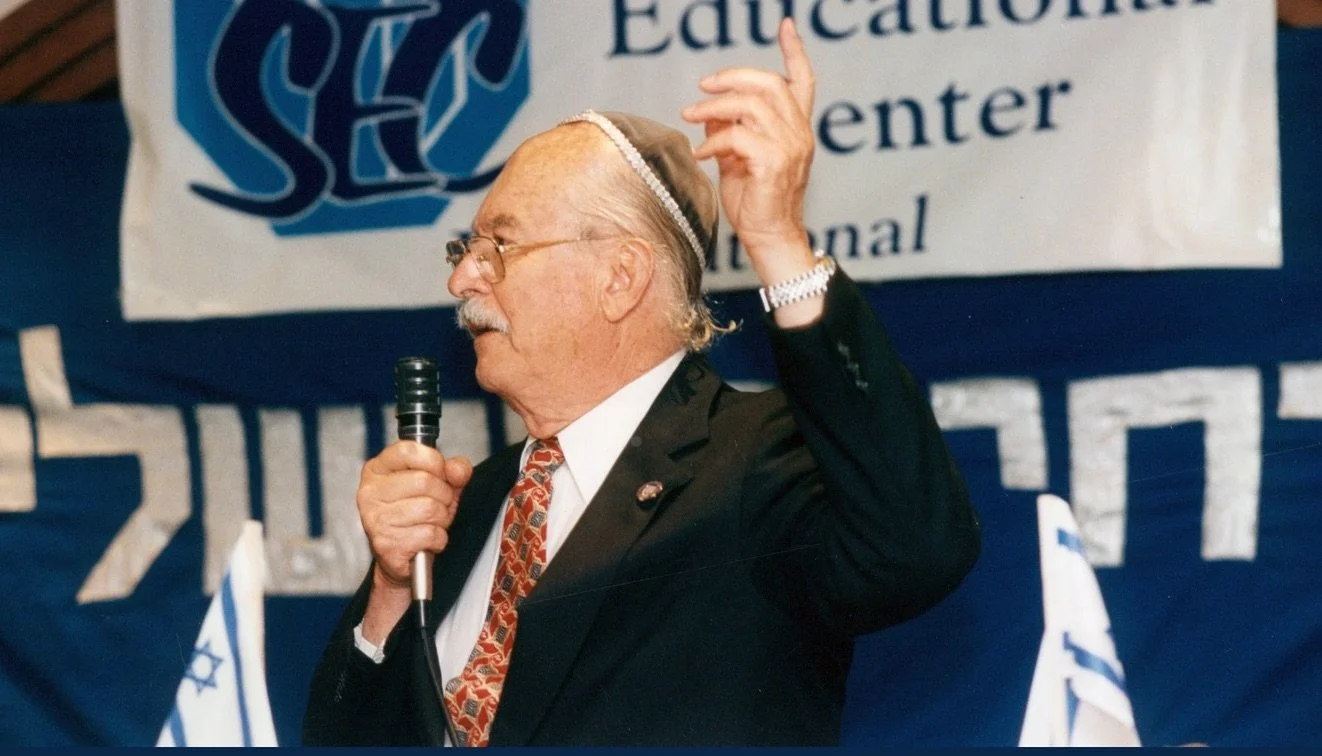
Dr. Jose Nessim z”l, SEC Founder
That vision is approaching its realization, for in September 2015, the first class of students will begin their studies in a new Sephardic rabbinical program in Jerusalem. This program is being created through a newly forged partnership between the Sephardic Educational Center and the Alliance Israélite Universelle, an organization with an illustrious history of education throughout the Sephardic world.
It is more than symbolic that the program’s home will be the Sephardic Educational Center’s campus in the Old City of Jerusalem. In the late nineteenth and early twentieth centuries, the buildings now owned by the Sephardic Educational Center once housed a Sephardic Talmud Torah for children and Yeshivat Tifereth Yerushalayim, a Sephardic rabbinical school whose curriculum and philosophy expressed the classic Sephardic spirit. The most famous student, teacher, and headmaster of Tifereth Yerushalayim was a young Rabbi Ben Zion Meir Hai Uziel, who would ultimately become the Sephardic Chief Rabbi of Israel.
In our desire to restore the crown to its former glory, the new rabbinical program will be named Midrash Shaarei Uziel: An Institution for Rabbinic Leadership in the Classic Sephardic Spirit. As in the past, the curriculum and philosophy of the new Midrash Shaarei Uziel will express the classic Sephardic spirit, with the goal of educating and training rabbinical leaders who will revive the authentic voice of Sephardic Judaism in communities all over the world.
The naming of the program Midrash Shaarei Uziel transcends the historical connection to the buildings where Rabbi Uziel once studied and taught. A halakhic scholar who fully embraced modernity, and a leader who sought to build bridges between peoples of all faiths, Rabbi Uziel was the quintessential classic Sephardic Chief Rabbi of the modern era. His spiritual way of life serves as the greatest model of how classic Sephardic Judaism can impact today’s divided Jewish world, especially when it comes to his tireless efforts on behalf of Jewish unity.
Rabbi Uziel envisioned rabbinic leaders whose communal work would be characterized by promoting a nondenominational Jewish unity:
We must remove this divisiveness that plagues us, and instead make our work as a community a reflection of peace and love. But who will stand and lead this change amongst us? This specific task belongs to the “Faithful in Israel,” our rabbinic and spiritual leaders. This belongs to them, because the Torah is not an alienating force; rather it is a force that brings people closer together. It is time that our rabbis and spiritual leader unite forces in their sacred work, and unite the entire Nation of Israel around them. Such unity, of spiritual leaders working together, unifying our people as one, will serve as our greatest source of comfort and strength. (Shabbat U-Moed 2.324)
Indeed, Jewish unity was Rabbi Uziel’s ultimate goal, as expressed in the Spiritual Will to the Jewish People that he composed just a few weeks prior to his death in 1953. The closing words of Rabbi Uziel’s Spiritual Will have been adopted by Midrash Shaarei Uziel as our guiding principle in restoring to the Jewish world the nondenominational mode of Sephardic Judaism:
Preserve with absolute care the peace of our nation and of our state—“And you shall love truth and peace” (Zechariah 8:19)—because disputes and divisiveness are our most dangerous enemies . . . they are like moths on the House of Jacob, causing our bones to rot. By contrast, peace and unity are the eternal foundations for the national sustenance of the House of Israel. Therefore remove all causes of divisiveness and disputes from our camp and our state, and place in their stead all factors that will lead to peace and unity amongst us. (Hegyonei Uziel 13)
The Jewish world needs a Sephardic renaissance. A revival of the enlightened teachings of Rabbis Uziel, Nissim, Halevy, and Shalem (amongst many other Sephardic luminaries) can help restore a way of life where tradition, modernity, culture, and social justice harmoniously coexist, and where the goal of Jewish unity trumps denominationalism. From Jerusalem to Los Angeles, the “Classic Sephardic Spirit” can re-energize our synagogues, our schools, and the most cherished institution from my Sephardic upbringing: our Shabbat and holiday tables.
Works Cited
Elazar, Daniel. “Can Sephardic Judaism Be Reconstructed?” Judaism 41.3 (1992): 217–28.
Halevy, Haim David. Ashe Lecha Rav. Tel Aviv: Society for the Publication of Rabbi Halevy’s Works, 1986.
Nissim, Yitzchak. La-Dor U’Ledorot. Jerusalem: Yad Ha-Rav Nissim, 2012.
Shalem, Abraham. Eshed Nehalim. Jerusalem: Cohen, 2009.
Uziel, Ben Zion Meir Hai. Mishpetei Uziel. Tel Aviv: Levitzky, 1934.
Uziel, Ben Zion Meir Hai. Hegyonei Uziel. Jerusalem: Society for the Publication of Rabbi Uziel’s Works, 2008.
Uziel, Ben Zion Meir Hai. Shabbat U-Moed. Jerusalem: Society for the Publication of Rabbi Uziel’s Works, 2011.