Classic Sephardic Judaism
THE KEY TO OUR FUTURE:
Message from SEC Director, RABBI DANIEL BOUSKILA
My parents were North African Sephardic Jews who came to Los Angeles in 1961. I was born three years later, making me a first generation American. Growing up, we spoke French at home, and the Judaism we practiced was deeply rooted in the Moroccan/Algerian-Sephardic traditions that my parents brought to these shores. Despite being born and raised in America and educated in the mainstream Ashkenazi Jewish day school system, when asked about my Jewish affiliation, I never use the denominational titles common in American Judaism. Instead, I express my identity as a “French-Moroccan American Sephardic Jew,” or, in short, a “Sephardic Jew.” This description is born out of the unique form of Judaism that we practiced in my home. What was that Judaism like?
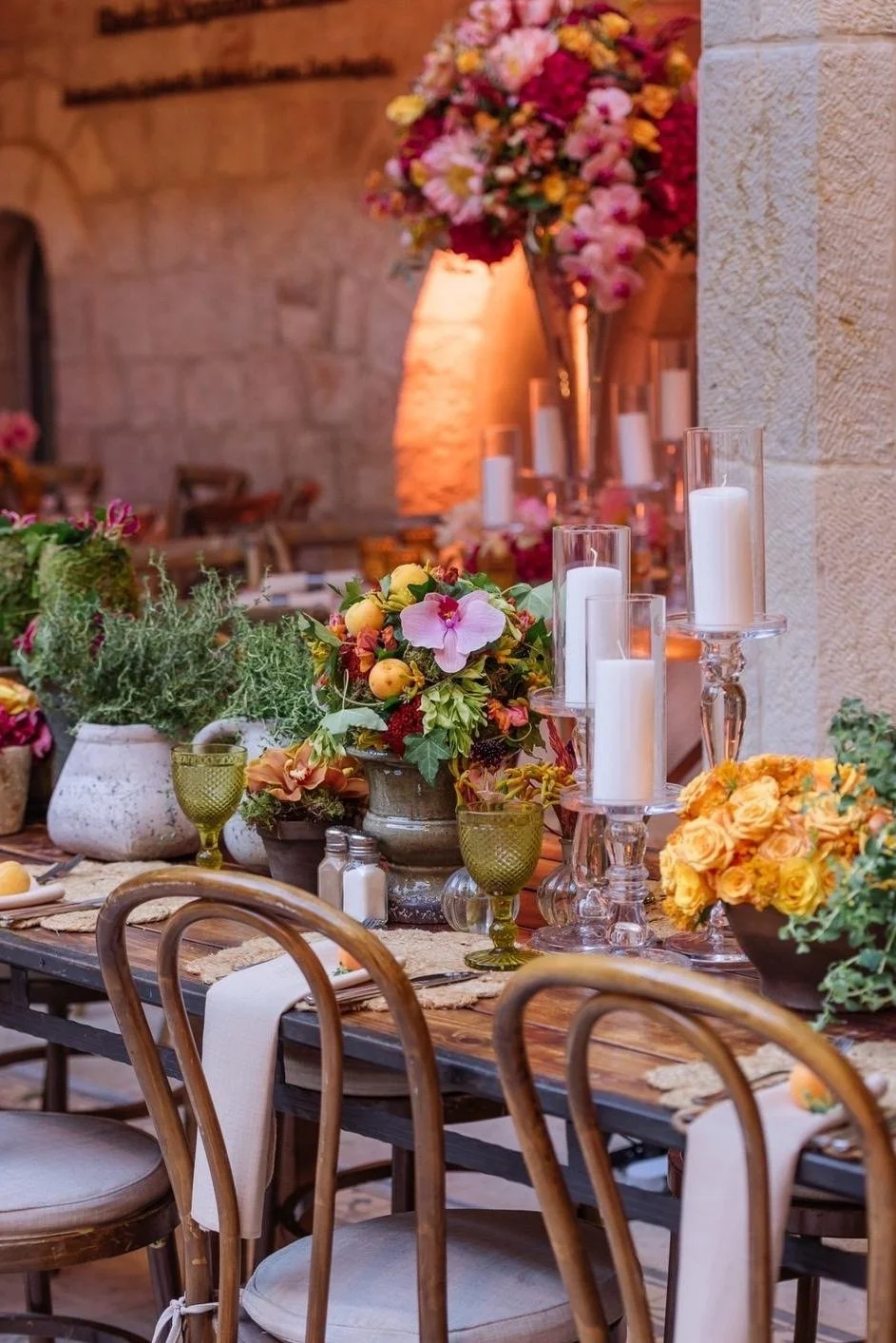
In the home where I grew up, denominational terms such as Orthodox, Conservative, Reform, Ultra-Orthodox or Secular Zionist were not a part of our vocabulary. Jews were Jews. My family observed and respected our traditions, including Shabbat, holidays and synagogue life. We were most probably considered “not religious enough” by certain people’s standards, but we were unapologetic about who we were. We did not live our Jewish life to conform to somebody else’s opinion, nor did we change our way of life because a rabbi wrote an article or delivered a sermon deciding to impose new strictures on the community. We celebrated Judaism with a deep sense of commitment to the heritage and traditions of our family’s ancestors. We observed Judaism with warmth and beauty. Shabbat and holiday tables were adorned with the artistic grandeur and culinary magic that my mother brought with her from Algeria. We delighted in our spicy and aromatic foods, our spiritually uplifting tunes, and our lively stories. Our Judaism was characterized by its genuine joie de vivre.
Our Shabbat tables – and our Jewish lives in general – were void of divisive denominational affiliations. We didn’t spend much time talking about our denominational “philosophy or ideology,” because we had none. Conversations about “right wing ultra-Orthodoxy,” “liberal reform” or “leftist secularists” were not a part of our Shabbat tables. Instead, we ate, sang, told stories, heard jokes in French and Arabic, laughed in good spirits, cried from emotion, and celebrated the beauty of our unique culture.
When we discussed Torah, it was a non-denominational Torah whose teachings were meant to increase our moral and ethi- cal character as people. Some may view all of this as naïve or simplistic. I view it as an “undeclared ideology,” one that was not born in conferences or conventions, but was naturally lived by thousands of Sephardic families over many generations. The great Sephardic rabbi and philosopher Maimonides, who encouraged Jews to live life in “the middle path”, inspired this rich and beautiful Jewish lifestyle. Maimonides’ “middle path” became the golden rule of Sephardic Judaism.
When I identify myself as a “Sephardic Jew” today, it is these very values handed to me by my parents that serve as my Jewish frame of reference. For me, the term “Sephardic” rep- resents much more than my ethnic background. Sephardic Judaism informs my values, celebrates my culture, and invokes my deep connection to my ancestor’s customs and traditions. It also informs my rabbinical career, specifically how I study, teach and practice Judaism within the complex and often confusing denominational world of American Judaism.
My parents always told me that the rabbis they knew growing up were the unifying forces of their communities. Everybody respected them as gentle sages whose leadership was characterized by wisdom, piety and a genuine love for people. My parents often remarked that their rabbis seemed more modern in their outlook than many of the rabbis they met in the United States. Their rulings in halakha (Jewish law and practice) were both moderate and modern, they always expressed a genuine concern for social justice, and their sermons inspired unity and goodwill. Only when I started to study the writings of Sephardic rabbis did I begin to understand what my parents meant.
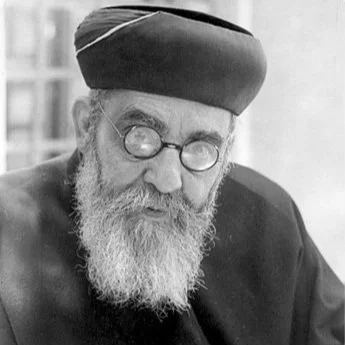
RABBI BEN ZION MEIR HAI UZIEL
(1880-1953), the first Sephardic Chief Rabbi of the State of Israel, was the embodiment of the Sephardic sage of my parent’s upbringing. A leading scholar and thinker, Rabbi Uziel’s multi-volume works in halakha and Jewish thought reflect the classic Sephardic fusion of traditional Torah with the modern world..
Rabbi Uziel introduces his nine volumes of halakhic writings by stating:
In every generation, conditions of life, changes in values, and technical and scientific discoveries, create new questions and problems that require solutions. We cannot avert our eyes from these issues and say ‘Torah prohibits the New’, i.e., anything not expressly mentioned by earlier sages is automatically forbidden. At the same time, we may not simply declare such matters per- missible, nor may we let them remain vague and unclear, with each person acting with regard to them as he wishes. Rather, it is our duty to search halakhic sources and to derive responses to address current-day issues.
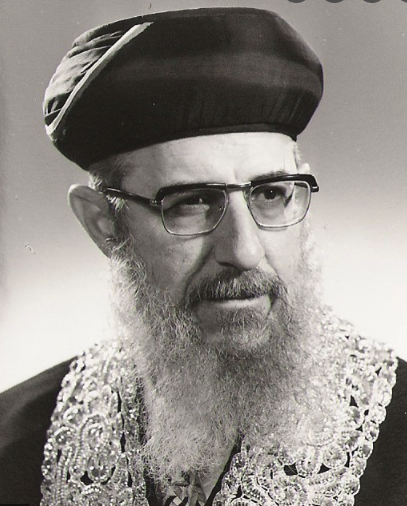
One of Rabbi Uziel’s greatest students was RABBI HAIM DAVID HALEVY (1924-1998) Rabbi Halevy served as the Sephardic Chief Rabbi of Tel Aviv-Jaffa, and was the prolific author of multiple volumes on halakha and Jewish thought. Following the lead of his teacher, Rabbi Halevy wrote a legal position paper titled On the Flexibility of Halakha, where he wrote:
... [continuity of Judaism] is possible only because permission was given to Israel’s sages in each generation to renew halakha as appropriate to the changes of times and events. Only by virtue of this was the continuous existence of Torah in Israel possible, enabling Jews to follow the way of Torah...There is nothing so flexible as the flexibility of halakha...it is only by virtue of that flexibility that the People of Israel, through the many novel and useful rulings innovated by Israel’s sages over the generations, could follow the path of Torah and its commandments for thousands of years.
Both Rabbi Uziel and Rabbi Halevy advocate for the classical Sephardic fusion between tradition and modernity. Unlike the liberal denominations of Judaism, they view halakha as a keynote feature of Jewish religious expression. But different than the trend of strictness characteristic of Orthodoxy, they believe that the modern world and halakha are not mutually exclusive, rather they are quite compatible. It is thus the responsibility of the rabbi to interpret halakha in a manner that reflects the meeting ground between tradition and modernity.
Rabbi Uziel commented on this in a broader sense:
Our holiness will not be complete if we separate ourselves from human life, from human phenomena, pleasures and charms, but only if we are nourished by all the new developments in the world, by all the won- drous discoveries, by all the philosophical and scientific ideas which flourish and multiply in our world. We are enriched and nourished by sharing in the knowledge of the world.
Not only must halakha be compatible with the modern world, but so, too, must the Jew who lives in the modern world. Dating back to the Golden Age of Spain, the milieu of Sephardic Judaism always sought to embrace the wider world without losing its own uniqueness and traditions. This approach to life is one of the hallmarks of classic Sephardic Judaism.
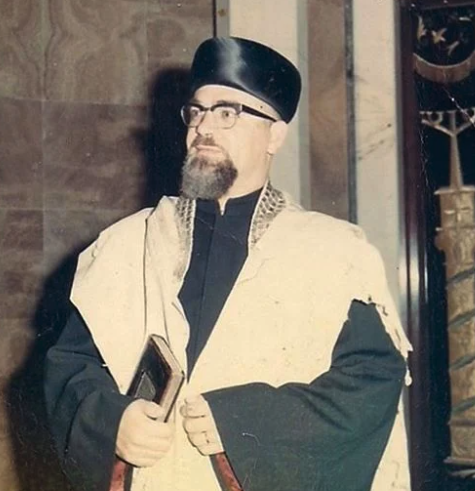
RABBI ABRAHAM SHALEM (1928-2014)
was this generation’s last direct student
of Rabbi Uziel. A Jerusalem native, Rabbi
Shalem served Sephardic communities in
Peru, Seattle and Mexico City, before re-
turning to Jerusalem as a rabbinic research
scholar and author (I had the great privilege
to know him and study with him in his home in Jerusalem for close to two years. Upon his passing, his family donated the bulk of his sacred books to the SEC’s Library in Jerusalem). Like his teacher, Rabbi Shalem was a classic Sephardic rabbi who combined a deep knowledge of Torah, a vast erudition in worldly affairs, and a genuine love and care for humanity.
Like his teacher, Rabbi Shalem was a classic Sephardic rabbi who combined a deep knowledge of Torah, a vast erudition in worldly affairs, and a genuine love and care for humanity.
In his commentary on the verse “They shall follow God’s way, doing charity and justice” (Genesis 18:19), Rabbi Shalem writes:
It is not sufficient to live by a dry and mechanical observance of Jewish law. We must impress upon all of humanity the importance of balancing human intellect with acts of charity and kindness, with teachings that reflect truth and equality, and with promoting a way of life that protects the human rights of all human beings created in God’s image, without discriminating based on race, color or creed. Repairing the world in the spirit of God, for the good of all of humanity, can only happen through loving our fellow man, protecting their human rights, and performing acts of charity and kindness, for this is the ultimate will of God.
In an article titled Can Sephardic Judaism be Reconstructed? the late Israeli sociologist Dr. Daniel Elazar concluded:
The revival of a living organic Judaism is the need of the hour in Jewish life. The best opportunity for doing so is through the Sephardic way. But can it be done? Only if there is a major effort to revive Sephardic halakhic interpreta- tion, train Sephardic rabbinical leadership, and present the Sephardic way as an equally valid expression of Judaism. A major effort must be launched to reconstruct the Sephardic halakhic tradition and make it a living tradition with hal- akhic authorities addressing the great religious questions of our time in the Sephardic way. The restoration of Sephar- dic modes of teaching and learning and the establishment of educational institutions, particularly higher educational institutions, that will provide a home for those modes and train people able to express and continue the Sephardic way.
The Jewish world needs a Sephardic renaissance, and I’m proud that the SEC stands at the forefront and center of that renaissance. We have proudly opened Beit Midrash Shaarei Uziel, where we have revived the enlightened teachings of Rabbis Uziel, Halevy and Shalem (amongst many other Sephardic luminaries). It’s our hope that our many programs centered upon these teachings can help restore a way of life where tradition, modernity, culture and social justice harmoniously coexist, and where the goal of Jewish unity rises above denominationalism. From our Center in Jerusalem to many diaspora commu- nities, the “Classic Sephardic Spirit” is back, and hopefuly can help re-energize our synagogues, our schools, and the most cherished institution from my Sephardic upbringing: those inspirational Shabbat dinners. My parents, from heaven above, are proud to see their beautiful mode of Judaism restored.